


The forecast calls for some new Spielberg aliens.
Steven Spielberg has been such an influential filmmaker for so many years that he’s now in a position to be influenced by his own cinematic disciples. It’s hard not to think of M. Night Shyamalan (who was prematurely crowned the next Spielberg in the wake of The Sixth Sense) or J.J. Abrams while watching Disclosure Day, Spielberg’s long-awaited return to extraterrestrial sci-fi. Still, Spielberg remains a master storyteller, and Disclosure Day is exciting and emotionally resonant even at its most overly familiar. It’s not groundbreaking, but in the hands of the creator of Close Encounters of the Third Kind and E.T. the Extra-Terrestrial, it doesn’t need to be.
The basic plot elements could be lifted from any alien-focused episode of The X-Files, with their emphasis on government cover-ups and common touchpoints of UFO conspiracies
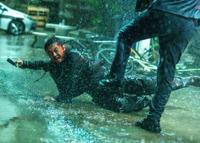
(Roswell, abductions, big-eyed gray creatures, etc.). Spielberg immediately drops the audience into the middle of the action, as cybersecurity technician Daniel Kellner (Josh O’Connor) is already being pursued by agents of Wardex, a super-secret black-ops division that has been hiding the existence of aliens for nearly 80 years.
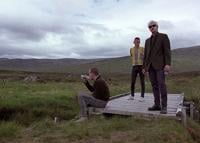
Daniel has stolen data that he plans to reveal to the world, which doesn’t sit well with Wardex leader Noah Scanlon (Colin Firth), who’ll go to any lengths necessary to keep that information from getting out. The title of Disclosure Day is a spoiler, though, and the inevitability of the outcome ties into the movie’s larger themes about faith and trust. Daniel trusts that humanity is ready to receive the good news about aliens, and his mentor (and fellow Wardex turncoat) Hugo Wakefield (Colman Domingo) trusts that the aliens themselves have only the best intentions.
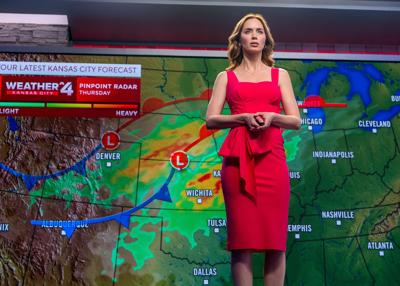
Daniel is more than just a concerned whistleblower, and his mysterious connection to the aliens also connects him with Margaret Fairchild (Emily Blunt), a local TV weather broadcaster in Kansas City who suddenly starts channeling knowledge she shouldn’t be able to access. Through Hugo, Daniel and Margaret are able to come together and bring their message of hope and unity to the world.
Or at least they will be if Scanlon doesn’t kill them first. Disclosure Day works best as a chase thriller, with Hugo’s underground resistance working to stay one step ahead of the ruthless and resourceful Scanlon. At times, it feels like a sci-fi take on Paul Thomas Anderson’s One Battle After Another, with some similar dry wit and even a segment in which the characters hide out at a nunnery, courtesy of Daniel’s former-novitiate girlfriend Jane (Eve Hewson).
Scanlon is no Col. Steven J. Lockjaw, but Firth makes him sufficiently menacing, with a slight undercurrent of sadness. Blunt and O’Connor bring more depth to their roles, and Blunt conveys a delightful mix of giddiness and terror at Margaret’s newfound telepathic abilities. Disclosure Day is at its strongest once Daniel and Margaret finally team up, racing to stay one step ahead of Scanlon and his goons. A sequence featuring the two of them attempting to escape from a trapped car onto a moving train ranks among Spielberg’s best-ever action set pieces.
There’s more to Disclosure Day than just running and hiding, and the movie is a bit clumsier when it engages with its deeper message about empathy and human resilience. Jane’s religious background leads her to question the theological implications of Daniel’s mission, and the finale makes big, bold statements about what learning the truth about aliens’ presence on Earth would do for geopolitics.
Disclosure Day takes place in a near-future time when the world is on the brink of all-out war, but Spielberg and screenwriter David Koepp (working from Spielberg’s original idea) leave those circumstances fairly vague, and other than a single scene of people panic-buying groceries, there’s little sense of the global danger. The nature of the aliens themselves is often expressed in metaphors rather than concrete details, and Hugo spends nearly the entire movie just speaking in soothing tones over a Bluetooth headset, assuring Daniel, Margaret and the audience that things will turn out OK.
That’s never really in doubt, and while Spielberg portrayed much less friendly aliens in his last major extraterrestrial outing, 2005’s War of the Worlds, here the danger comes solely from frightened, power-hungry humans. It may seem odd to say that Spielberg has made a Spielbergian movie, but by surrounding himself with longtime collaborators (including Koepp, cinematographer Janusz Kamiński and composer John Williams), he guarantees that Disclosure Day looks, feels and sounds like the work of a Spielberg acolyte.
When O’Connor gazes up in wonder with what critic Kevin B. Lee memorably dubbed the “Spielberg face,” it’s both reassuring and a bit of a self-parody. As great as some of his filmmaking followers may be, nobody can make a Spielberg movie like Spielberg.