







Imagine you’re in a cramped, cluttered room lit only by fluorescent bulbs. There’s a window, but it’s small and partially obscured. When it’s open, the only sound that enters is the rumble of traffic. The furniture is plastic; the flooring is vinyl. Both outside and in, there’s not a plant to be seen — not even in the photos on the wall.
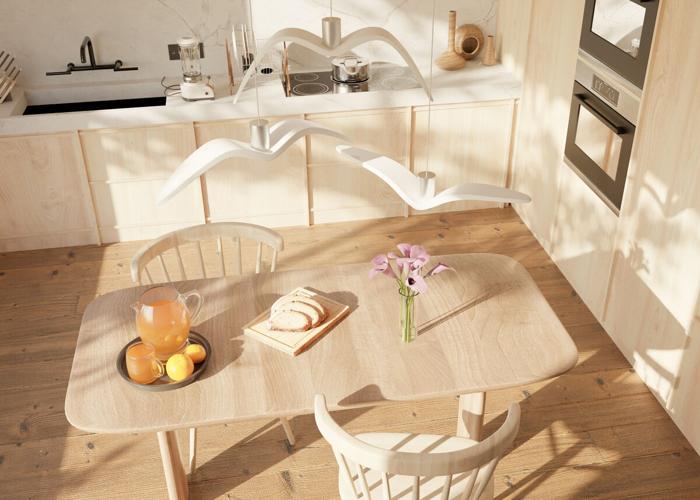
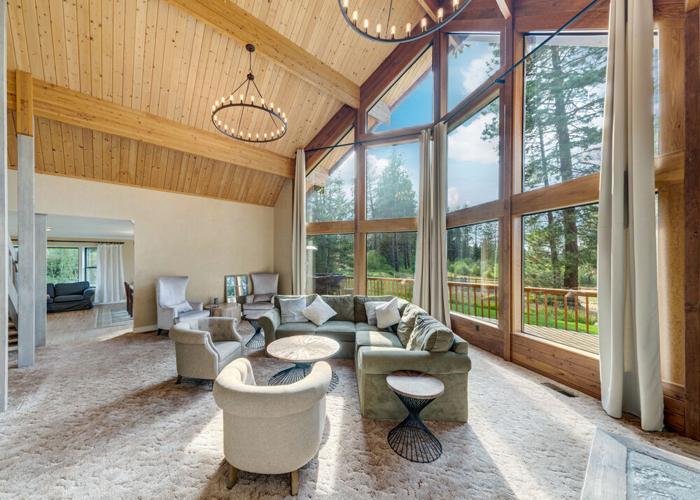
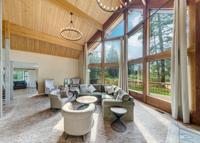
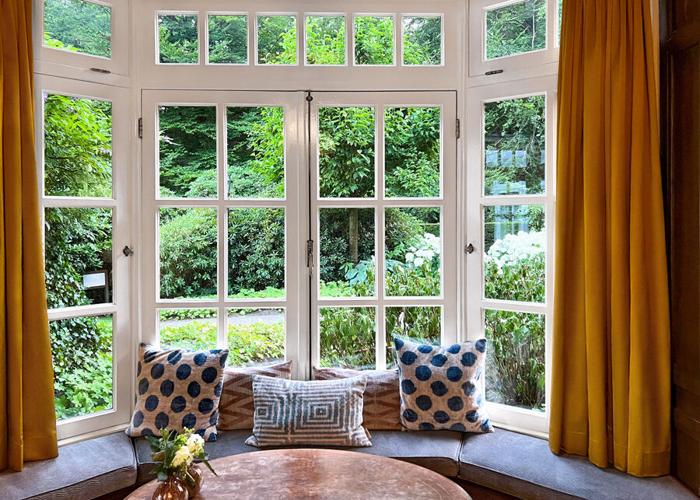
Now imagine the opposite: a well-arranged room where soft, natural daylight streams through a window that offers a view of a park or a copse. Lift the sash and you hear the rhythm of ocean waves or the steady flow of a river. The furnishings and décor incorporate materials like wood, natural textiles and clay. Around you there are some live plants backdropped by images of animals and landscapes.

Bill Browning
The second space is the one that would immediately appeal to most of us. Yes, even teenagers and college students.
But what explains that subconscious affinity? As suggested by a body of research that’s been growing since the 1980s, it’s a disposition called biophilia that might be intrinsic to our species — and one that likewise benefits our general well-being.
Biophilia — a concept that’s been introduced in the pages of Health & Home before — is a term coined by the sociologist Erich Fromm and later adopted by biologist Edward O. Wilson in a 1984 book of the same name.
Bill Browning, co-founder of the New York City-based sustainability consulting firm Terrapin Bright Green and chair of the Biophilic Institute, defines it as the “innate affiliation of humans to other living organisms and lifelike processes.”
“We know that even just looking at a picture of a scene of nature, like a beautiful meadow with a stream in it, will lower your blood pressure and lower your heart rate. So it lowers your stress. It can be that simple,” he says.
Brain Works
Looking at a pleasant picture as a form of stress relief might sound like a no-brainer, but the brain is actually a key player in that cause and effect, and the mental mechanisms that underpin it are still being investigated. Along those lines, Browning’s firm published a paper in 2022 titled “The Nature of Wood,” which distilled the available research on why people tend to gravitate to wood as a natural material.

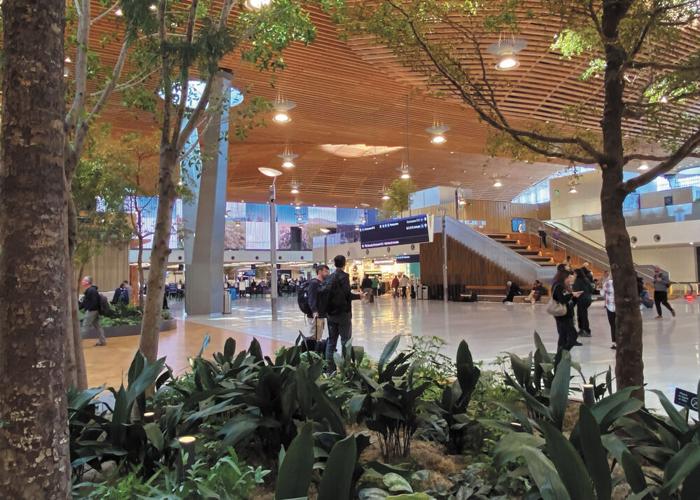
Bill Browning and his firm Terrapin Bright Green consulted on the award-winning, newly rebuilt Portland International Airport terminal that opened in 2024. Among many features are an indoor forest, thriving under nearly a nine-acre wood slat ceiling. The sustainable-design creates a calming ambiance in what’s often a busy and stressful location. Read more about “14 Patterns of Biophilic Design” at terrapinbrightgreen.com/reports/14-patterns
“The conclusion that we came to is that it’s probably one of two things. The first is what’s called semantic or associative processing in neuroscience. That’s where the brain goes, ‘Oh, look! Wood. Tree. Alive,’” he says.
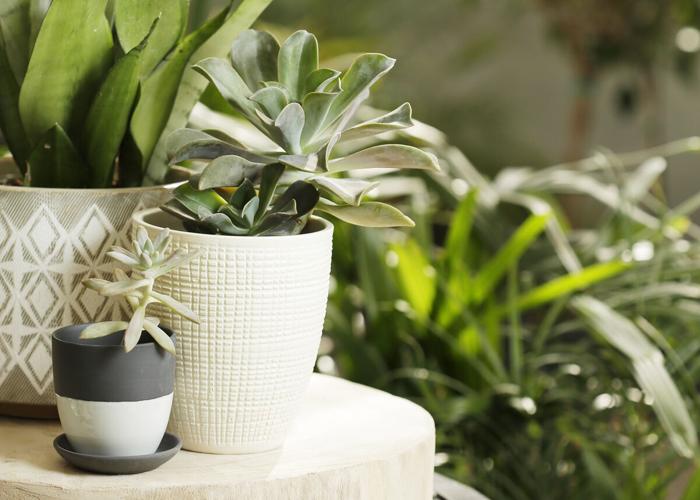
Incidentally, that same type of associative leap, or “transit,” might be at work when we have a collection of different houseplants. As Browning explains, “That is likely the brain going, ‘Look, there’s a little habitat. So if there’s a little habitat here, then this must be a good place for me to be.’

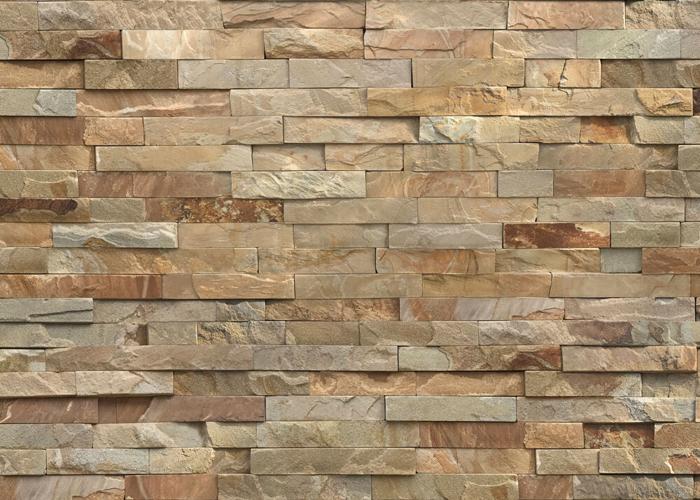
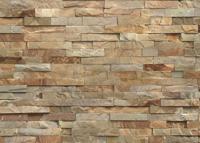
Minimally Processed Materials

Natural Light and Shadows

Indoor Plants

Unimpeded views

Protected places for rest
“But [the mechanism] we think is more important is when you see a pattern where there are a series of lines moving roughly in the same direction — what’s called a collinear pattern,” he continues.
“It’s one bundle of neurons in the brain that processes that, so it’s much easier and quicker and less stressful for the brain to process that pattern. And what is wood grain but a whole bunch of collinear lines moving in roughly the same direction?”
Browning’s company has summarized some of biophilia’s high-level takeaways in a paper called “14 Patterns of Biophilic Design: Improving Health & Well-Being in the Built Environment.” In it, they outline how light, water, airflow and even a very primal sense of safety can positively affect cognitive performance as well as our mind-body relationship.
Sarah McGovern, a level three interior designer at Uptic Studios in Spokane, jokes that it’s easy for biophilia to sound “woo-woo” and New Age-y because of its emphasis on humans’ relationship to nature.
Yet many of its tenets jibe with long-established fundamentals of design, and biophilic considerations have now been incorporated into many of the major green building rating systems like LEED, BREEAM and Living Building Challenge. McGovern herself often puts biophilic principles into practice when she’s imagining a space — starting with the basic dimensions of the room and continuing to the arrangement of objects in it.
“The layout needs to be legible. This means easily perceived and understood,” she explains. “Things generally should sort of align in a way that makes sense to people. That kind of order makes people feel a little bit like they’re more in control.”
She points to high-stress environments like hospitals as one example of where this kind of wayfinding clarity is especially important and has a direct correlation to our mental and physical health.
At the same time, McGovern notes that biophilic design doesn’t equate to a one-style-fits-all approach. It’s flexible enough to be adapted on a space-by-space basis depending on how each of those spaces are used.
“One of the questions that we almost always ask somebody to start is, how do you want to feel in this space? In your living room, do you want to feel social, engaged, stimulated, gregarious? And in the bedroom, do you want to feel relaxed and cocooned? If your goal is sleep hygiene, sometimes it’s important to limit the light or limit the [sensory] input that is present in a room like that.”
And perhaps the biggest plus of biophilic design is that it doesn’t require a remodel. Biophilic elements can be introduced fairly easily into any interior space, whether it be a warehouse, a retail shop, an attic or an office cubicle.
“Find photographs of nature that you’ve taken of places you love and put them up in your space,” Browning says. “Get wood furniture where you can see the wood grain and don’t paint over it. Have some plants. Celebrate your animals. And if you can, open the window and let a little breeze and daylight in.”