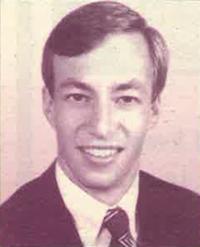
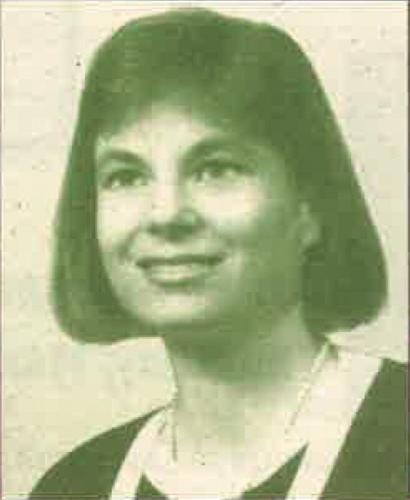
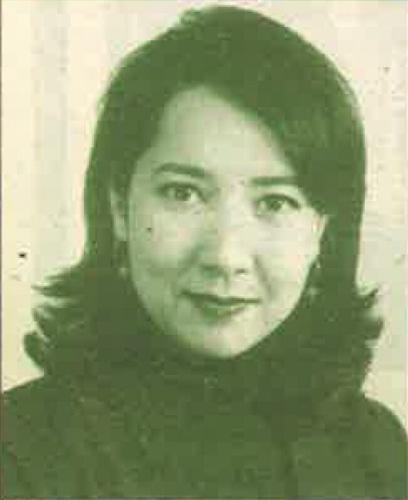
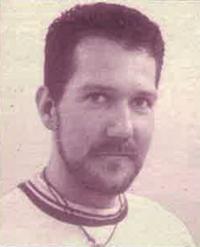
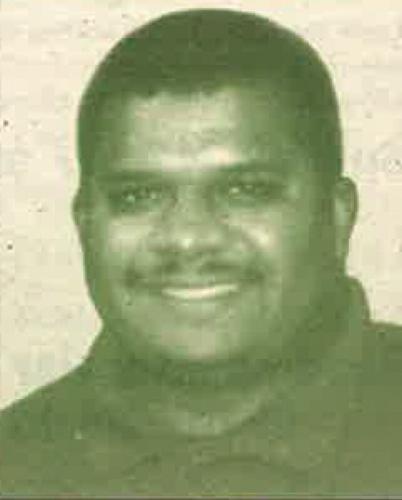
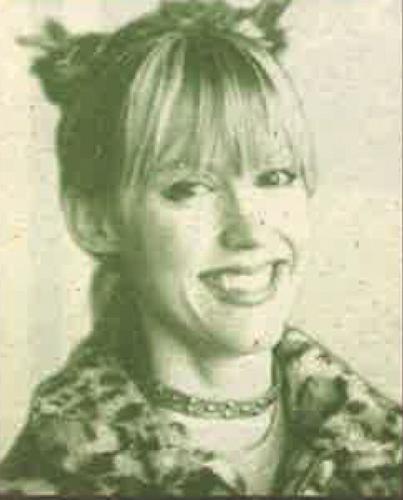
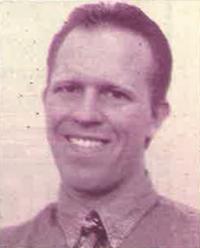
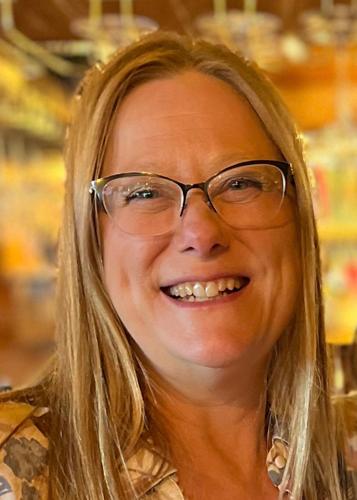
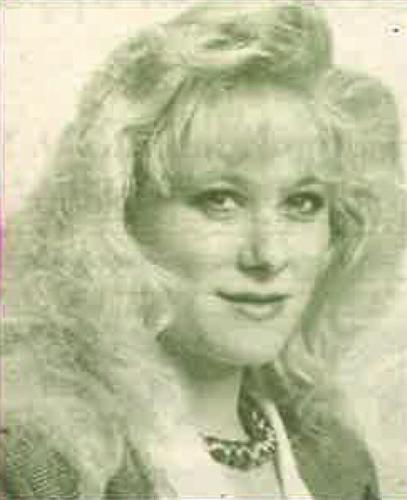
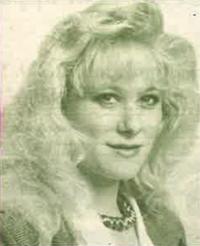
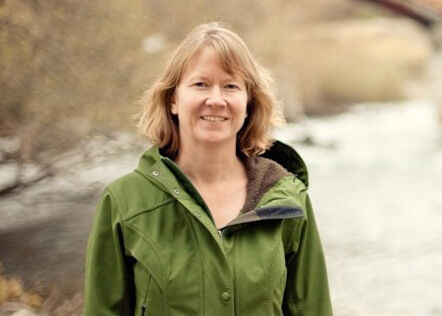
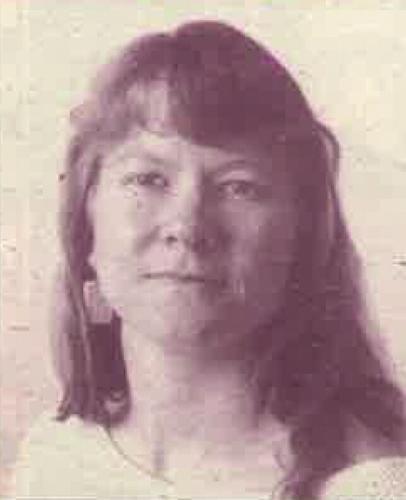
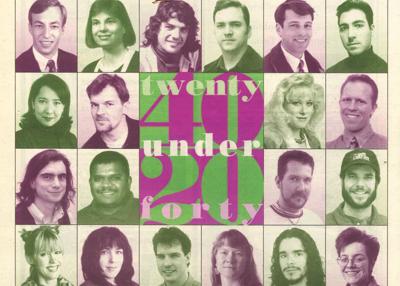
Back in December, a post on Spokane’s Reddit forum caught our attention. A user (credit to FrenchFry5725) asked “Anyone recognize anyone?” alongside their photograph of a framed Inlander issue cover, our 20 Under 40 issue, dated March 13-19, 1996. A $4.99 Value Village sticker had been slapped onto the bottom corner of the glass.
While the top-voted comment called out the perhaps unreasonably high pricing, several local users began chiming in to correctly identify some of the 20 people featured on the green-and-purple duotone cover rounding up the Inland Northwest’s rising leaders of three decades ago in a grid layout.
With the 30th anniversary of said issue approaching at the time, we couldn’t pass up the opportunity to check in with as many of those past cover stars as possible. While the original issue predates our digital archives, Inlander publisher Ted McGregor knew exactly where to find an original copy in our physical archives.
In March 1996, the Inlander had been publishing for less than three years. Spokane, and our world, was a much different place. But as we began reaching out and chatting with people highlighted in that three-decade-old issue, we began to see a pattern. Sure, some folks moved away from the region (and a handful proved impossible to track down), but the majority of people stuck around for the long run, continuing their meaningful efforts to improve our community.
As we look back this week on what they’ve all been up to in the intervening years, it’s clear that each of them has accomplished plenty to be proud of.
— CHEY SCOTT, Inlander Editor

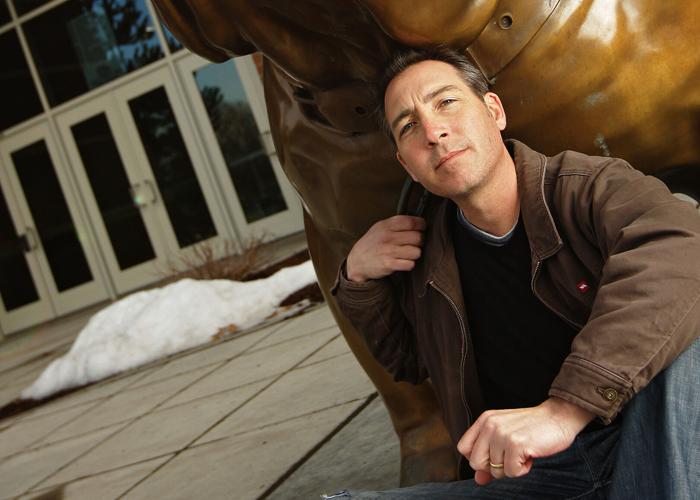
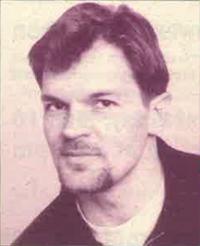
Vincent De Felice photographed in 2011 for an Inlander story on his bronze statue of Gonzaga University’s bulldog mascot outside the McCarthey Athletic Center.
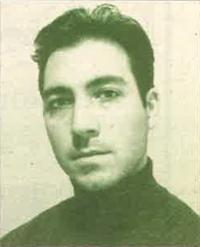
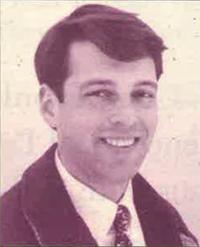
VINCENT DE FELICE
Then: 28, movie art director and sculptor
Now: 58, movie art director and sculptor
The Spokane film scene was in a fledgling state back in 1996, when sculptor Vincent De Felice was serving as art director for North by Northwest Productions.
Fast forward to this year, when a local production he worked on — Train Dreams — was nominated for four Academy Awards.
De Felice still works in sculpting and cinema all these years later, his works are just now seen by many more people.

On Train Dreams, De Felice helped run the scenic department, a small band of of artists tasked with honing the minute details of objects by painting things to make them look old and distressed, sculpting old-growth three stumps and rocks in the background, or hand-painting signs to fit the period. It’s the type of work that De Felice hopes doesn’t catch anyone’s attention.
“Although our stuff is seen quite prominently in many scenes, no one knows that that didn’t necessarily exist there anyway,” he says. “And so if we’ve done our job well, nobody notices our work. They assume that it was that way. So there’s kind of fun and magic in that.”
The artistic life demands having a ton of different gigs at any given time, and De Felice has been prolific in myriad ways these past 30 years. He estimates he’s worked on at least 40 feature films, 75 television episodes, and hundreds of commercials (making props like the $1 million cube of cash that’s appeared in recent Northern Quest Resort & Casino ads). He ran a gallery in the Davenport Hotel called Galleria De Felice for six years.
Those three-dimensional foam fingers that became trendy nationally among sports fans years ago? De Felice created them. He recently became the official restorer and painter for Riverfront Park’s Looff Carrousel.
In addition to memorial monuments for cemeteries and restorations for churches, high-profile examples of his bronze sculpture work include Louis Davenport inside the Davenport, the swans at Manito Park, and “The Three Companions” statue at Gonzaga Prep. (De Felice is particularly proud that Pope Francis kept a model of that work in his personal apartment and it now resides in the Vatican collection.)
He’s also the man behind one sculpture that may even surpass the Garbage Goat in terms of being Spokane’s most photographed statue: the huge bronze effigy of Spike the Bulldog that stands guard outside Gonzaga’s McCarthey Athletic Center.
While he defers most of the credit to the talented collaborators he’s worked with over the years, there’s something to be said about creating real tactile things in this tech-driven age.
“There’s an ongoing push for more things digital,” De Felice says. “But in the end, at least in my world, things need to get made in physicality. And there is great pride in basically creating something and making it be present, and having done that with your hands. That’s true both in the fine art world and in the movies.” (SETH SOMMERFELD)

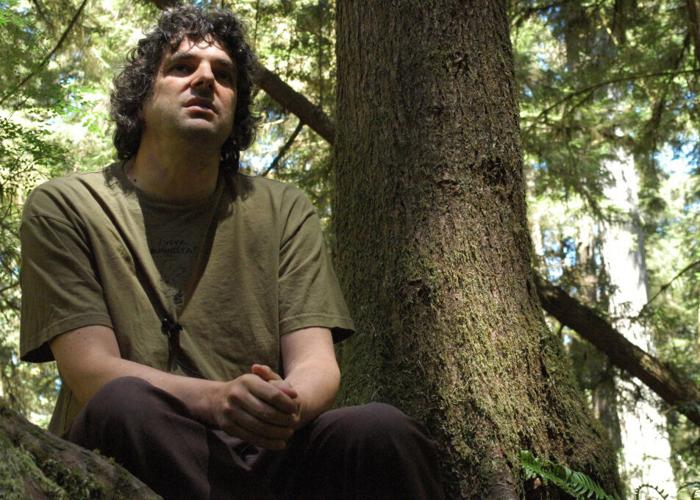
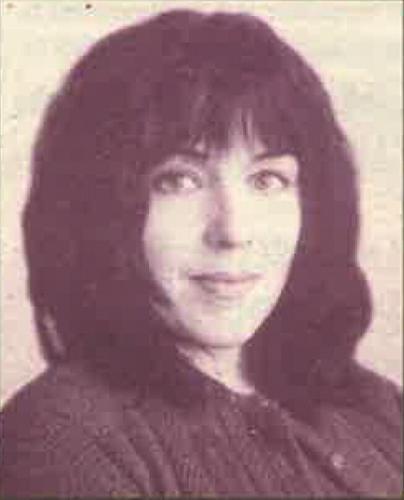
DERRICK JENSEN
Then: 35, author and environmental activist
Now: 65, author based in Crescent City, California
When the Inlander talked with Jensen in 1996, he was an adjunct professor at his alma mater, Eastern Washington University, and had published two books. A year later, he wrote A Language Older Than Words, which he says finally “put him on the map.”
“I guess the themes that I hit most heavily are environmental destruction and violence against women,” Jensen says today of the 28 books he’s published.

His passion for the environment started as early as second grade, when a subdivision was being developed in meadows near his childhood home in Colorado.
“One of the things I love about writing is that I always get to be on the steep part of the learning curve,” he says, explaining that with each book he gets to deep dive into new topics.
The latest novel that he’s working on, for instance, was inspired by caretaking for his mother, who died seven years ago.
“I was writing a lot about death in that book,” he says. “Of course, every living being thinks about death sometimes, but I had to really focus on it for the two years I wrote that book.”
While Jensen notes it might be cliche, he recommends that young people today pursue something they truly enjoy, even if it means failing and trying new things to get there. Being an author often comes with countless rejections from publishers and lower pay, but Jensen left his well-paying engineering job to take up the pen for a reason.
“I can’t imagine having lived any other life,” he says. “It’s just such a great way to live.” (DORA SCOTT)

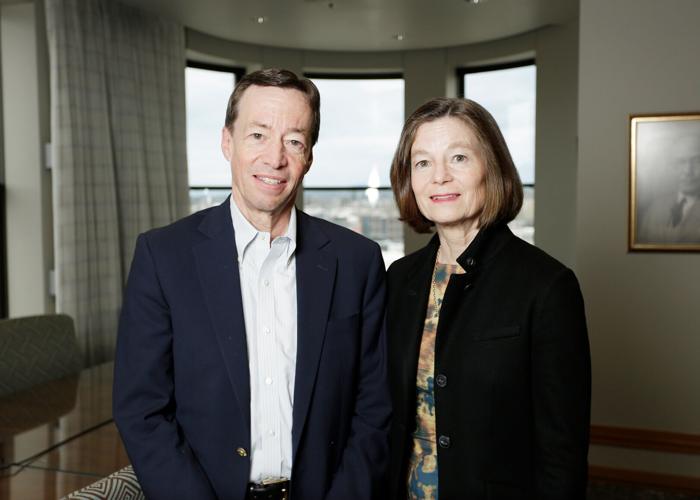
Stacey and Betsy Cowles are both still working in the family business.
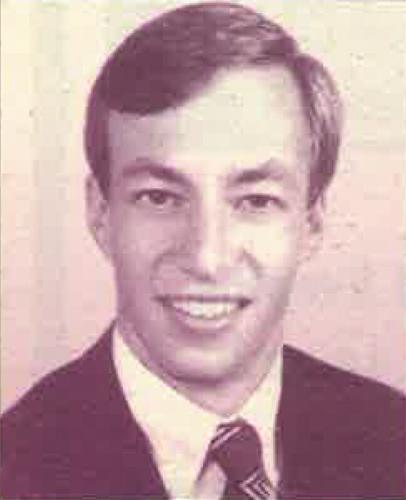
STACEY COWLES
Then: 35, publisher of the Spokesman-Review and helping lead Cowles Co.
Now: 65, still publisher of the Spokesman-Review, president and co-CEO of Cowles Co.
Just a few years before being featured as one of the 20 under 40, Stacey Cowles became the founding chairman of the Downtown Spokane Partnership. It was also around the time he stepped into the role of publisher at the Spokesman-Review, which at that point his family had owned for nearly a century.
His interest in downtown organizing was piqued by a proposal to create a business improvement district, which was being discussed by the downtown property owners
association.
“I attended two meetings, and both meetings got hijacked about 10 minutes in because somebody said, ‘Hey remember that time during Expo when…’ They met over lunch, and they just had a great time reminiscing about the World’s Fair,” he says. “The second time that happened I said, ‘Hey I just want to ask, how are things going with this BID project? Don’t you think you ought to be sending a group out to see what Seattle, Denver and Portland are doing?’ because they were all revitalizing their downtowns.”

As some of the old-timers were content to reflect on the massive undertaking of their younger years creating Riverfront Park, they told Cowles he should go do that research. So he gathered other young people to do just that, and ultimately they created the business improvement district and the Downtown Spokane Partnership, also known by its acronym DSP.
Between the River Park Square renovation, the business improvement district and a renewed focus on residential opportunities, he says the decade between 1999 and 2009 probably saw about $4 billion of investment throughout downtown. He says in many ways it was the root of what would later become the popular slogan “Spokane Doesn’t Suck.”
“It became a gathering point for young people, and, you know, there were a lot of students who decided they could make careers here, as opposed to going to the West Side to get started and bouncing back,” he says. “That really led to the … acceleration of the entrepreneurial movement here. I don’t think it would’ve happened if we hadn’t been able to revitalize downtown.”
Over the last three decades, he’s served on many boards, most recently finishing a turn as chair of Greater Spokane Inc., the region’s chamber of commerce.
“I was sort of thinking that would be my swan song, but I got myself put on the Safe and Healthy Spokane Task Force, which is coming up with a proposal for the jail modifications,” he says. “Really, it’s turned into a much broader initiative to deal with mental health and addiction across the county. So that is a profound change that I hope we get accomplished.”
Last year, the family also announced its intentions to gift the Spokesman-Review to a nonprofit once enough funding is gathered. Cowles says that could happen this year.
Otherwise, over the next few years he’s planning to keep overseeing the transition from newsprint production to other paper products at the mill, and perhaps find more time to play pickleball.
“It’s great to see young people stepping up and taking the reins, so to speak, of the community,” he says. “I think Spokane is a place where that happens fairly easily. You know, as soon as somebody volunteers or even hints that they might put their hand up, I think we are capturing them and putting them to work.” (SAMANTHA WOHLFEIL)
BETSY COWLES
Then: 33, chair of NBC affiliate KHQ and gearing up for an $80 million project to revitalize downtown by improving River Park Square
Now: 63, chairman and co-CEO of Cowles Co., which owns the Spokesman-Review, the Spokane Journal of Business, KHQ and other TV stations, the Inland Empire Paper Co. paper mill, real estate holdings, and other operations that collectively employ about 700 people across Washington, Idaho and Montana.
At the time our 1996 issue came out, Betsy Cowles was preparing to lead the way on a major revamp of River Park Square, which had originally opened just in time for Expo ’74.
The 1990s project included building the parking garage for the downtown mall. The work ultimately landed the Cowles Co. in court for years due, in part, to concerns over public money initially funding the garage.

Still, when asked what the lasting legacy of that project is, she says working to keep anchor tenants like Nordstrom (which has remained downtown for more than 50 years) and other businesses thriving was ultimately a catalyst of sorts, inspiring multiple other significant improvements within a few years. Right around the turn of the millennium, the community and the Spokane Symphony rallied to save the Fox Theater from demolition, Walt and Karen Worthy restored the Historic Davenport hotel, and there was a renewed vitality in downtown.
“Downtowns, well, cities in general, they go through cycles, and that was a kind of challenging down cycle in the late ’80s and early ’90s, and then we had this major resurgence — River Park Square was one of them,” she says. “We really had a kind of long run of vibrancy and then, you know, COVID hits. There’s always going to be some bump in the road, and that was a pretty big one. But I really feel like the city itself is beginning to rebuild that momentum that we were seeing just before COVID.”
She points to more recent improvements in the area, like The Podium and ONE Spokane Stadium, as continuing to build off the momentum of prior upswing phases downtown.
Over the years, she’s seen such improvements put Spokane on the map. Back then, when attending conferences, she says she’d often have to specify she was from Spokane, Washington. Now? It’s OK to just say Spokane.
She says it’s also been a treat to have such a “long, great working relationship” with her brother, Stacey. They learned from the strong example set by their father and uncle, who worked together throughout their lifetimes, too.
While she says, “I don’t know how to spell retirement,” she’s been enjoying a transition to mentoring.
“It’s an interesting shift in your perspective from the 30s to 40s to 50s and now 60s, where, yes, the big projects are fun, and I really enjoy creating something and figuring out how to make it work and delivering it,” she says. “But equally as fun is to watch and help the next set of leadership within our company, kind of growing and expanding in their potential.” (SAMANTHA WOHLFEIL)

MARTI D’AGOSTINO
Then: 31, foundation director and volunteer
Now: 61, retired
After over 30 years of work in the nonprofit world, Marti D’Agostino (nee Kransberger) is now enjoying retired life.
She was the executive director of the Children’s Miracle Network for 13 years and then the development director for the Ronald McDonald House for 10 years. Now, she’s spending her days playing mahjong, spending time with her two sons and traveling around the world with her husband.
“We just went to Japan over Christmas and New Year’s,” she says. “Japan is probably my favorite place I’ve been so far. It has everything. The food is great, the transportation, the hospitality, the architecture and the peacefulness.”
She couldn’t completely stop supporting the community, however, so D’Agostino spends some of her peaceful retirement serving on the Hutton Settlement’s board of trustees. (MADISON PEARSON)

ANDY BILLIG
Then: 27, Spokane Indians GM and VP of Spokane Shadow (pro soccer)
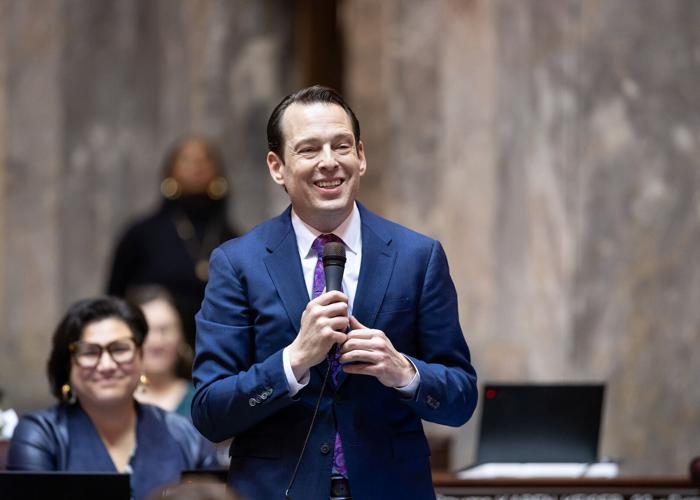
Now: 57, Former Washington state senator and representative, current CEO of Brett Sports
When the Inlander checked in with Andy Billig back in ’96, he was the young general manager of our minor league baseball team, the Spokane Indians. And 30 years later, he’s still in charge of things on the diamond as the CEO of Brett Sports, the group that owns the Indians and Spokane Chiefs. So nothing’s really changed…
…Except for a little career detour after being elected by Spokanites to represent them in state government four times.
“I had always been interested in politics. I grew up in Washington, D.C. I was a government major at Georgetown, but at that point, when I was in the Inlander, I was just living my best life, getting to be the general manager of a professional baseball team. And I thought that was pretty cool. And I still think that’s pretty cool,” Billig says with a laugh. “I did not envision that I would have a whole other career as an elected official at that time.”

After being elected as a Democrat to the Evergreen State’s House of Representatives in 2010, Billig was voted to serve three terms in the state Senate, where he was the Senate majority leader from 2019 to 2025. While his elected accomplishments top his Wikipedia page, Billig credits his experience in the sports world with helping him get his foot in the door (sometimes literally) in politics.
“One of the realizations I had was that being the general manager and then later the president of the Spokane Indians, was just about the best thing I could do to get elected in Spokane,” he says. “Because I would go around and knock on people’s doors, and they kind of crack the door a little bit, and I would say, ‘Hi, I’m Andy Billig, the president of the Spokane Indians baseball team...’ and the door would swing wide open. ‘We love the Spokane Indians!’ No joke — I had multiple people say, ‘I know you! You helped my child when they got hit by a foul ball at the game!’”
Billig says there was “tremendous overlap” between running a baseball team and being an elected official — customer service with the Indians wasn’t much different than serving his constituents. Because Washington has a citizen legislature, Billig’s job during the political offseason was an advisory role for Brett Sports. So while he had a 14-year gap in full-time sports work, he was able to hit the basepaths running when getting back in the game.
In terms of “20 Under 40” achievements, Billig’s career has been a home run. (SETH SOMMERFELD)

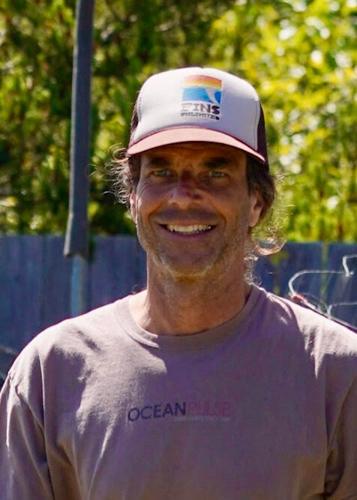
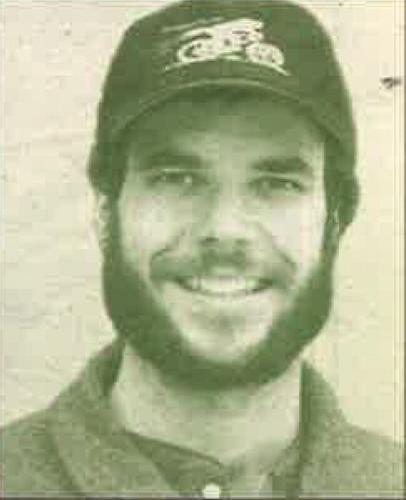
TOBY FEULING
Then: 25, athlete and founder of Alpine Designs
Now: 55, father and former co-owner of Hempbest Farms
“I was 25 at one time?” asks Toby Feuling. “That’s crazy.”
The print record shows that Feuling was indeed once 25. And back then he was deep into racing and manufacturing mountain bikes, having founded and launched his company Alpine Designs four years earlier in 1992. Operating out of Sandpoint, Feuling was doing a brisk trade in the local market and even eyeing international distribution.
Alpine Designs ended up moving into a roughly 6,000-square-foot shop and handling all of its manufacturing on-site. Then a combination of life and industry developments caused Feuling’s course to shift. Bike manufacturing began moving overseas to cut costs. Domestic suppliers closed shop. Premium hand-built bikes like his own fell out of fashion. With a view to downsizing, Feuling moved to Oregon to be with his baby daughter and then-wife, who was pursuing her master’s degree.

Around 2013, after a few years of developing custom frames and bikes on a smaller scale, Feuling went full time into the cannabis industry.
“When we came here to Oregon, I had some experiences with medical patients. That really lit a spark of compassion inside me,” he says. “One of the main things I always liked about bicycles was that they just made people healthier and happier. It basically adds to your quality of life, you know? And cannabis, especially medical cannabis, was the same kind of parallel.”
The indoor/outdoor cannabis farm, called Hempbest, doubled as a way for Feuling to adopt regenerative practices that provided habitats for native birds, reptiles and pollinators while also restoring the health of the water and the soil. A little later, he turned part of the property into a Hipcamp, which he describes as “an Airbnb for camping.”
“All of a sudden,” he says, “it also became a sanctuary or an oasis for travelers and a little bit of a destination for people who wanted to come and experience the farm.”
That helped foster the same kind of community and friendships that he fondly remembers from his days on the competitive racing circuit and building custom bikes. Perhaps unsurprisingly, those early relationships have endured across the decades.
“I still regularly get pictures and emails and sometimes texts from people who still have my bikes rolling 30-some years later,” he says. “And they just give me little stories about how much it’s meant to them and how it’s been part of their own journey. That just makes you feel really good.” (E.J. IANNELLI)

JON CAROLLO
Then: 26, Children’s therapist with Lutheran Social Services
Now: 56, Housing capacity program manager, Washington Department of Social and Health Services
Jon Carollo doesn’t quite remember how it felt to be honored in the Inlander’s “20 under 40” issue, but looking back now, he says it’s a cool notch to have in his belt. Since then, he’s spent 30 years working throughout Spokane to support people experiencing health issues and/or homelessness.
When we first featured Carollo, he was a children’s therapist with Lutheran Social Services, now Lutheran Community Services Northwest, spending most of his time with kids who had suffered some sort of abuse. He stayed in that job for a decade until the early 2000s when he moved into a career at CHAS’ Denny Murphy Clinic as a mental health counselor. There he moved up to become the clinic’s director of integrated services, focusing on substance abuse, drug and alcohol counseling, mental health, and HIV care.

After his time with CHAS, Carollo continued to work with folks diagnosed with HIV and AIDS at North Idaho AIDS Coalition (now North Idaho Alliance of Care).
“I had sort of an existential moment as a professional that I was doing a lot of therapy with people who didn’t have a home. And at one point I thought, ‘What actually might be easier is just to see if we couldn’t find people places to live, rather than doing a lot of therapy about the impacts of experiencing homelessness,” he says. “So, I moved over to the housing side of social work just to see if we couldn’t actually start creating opportunities for people to have some stability.”
This desire to get to the root problem led him to Spokane’s chapter of Volunteers of America. He spent more than a decade there in numerous roles to support people looking for housing. Before leaving the organization, he was director of Hope House, a women’s shelter providing permanent supportive housing.
Still in Spokane, Carollo now works for the state Department of Social and Health Services as a housing capacity program manager.
“I’m still trying to find housing opportunities for people with disabilities. And I’m a liaison with property owners and managers to see if, as they’re building new housing around the state, they would be willing to set some units aside for our referred clients,” he explains.
Though the work has always been challenging and mentally taxing, Carollo says the impact housing has on people is the biggest motivating factor. Giving back to the community he was raised in (he graduated from Northwest Christian School in 1988) is a big plus, too.
“Spokane is easy. It’s a great community. There’s a ton of compassion here, and I just really love the social services community.” he says. “Every job I’ve had and everywhere I’ve been, the work has been really hard, but I got to learn from some really amazing clients, and I got to work alongside some really amazing coworkers, and that makes it so much easier.” (COLTON RASANEN)

JOHN SCHUTZ
Then: 31, seventh grade school counselor at Garry Middle School
Now: 61, retired
Although many of those featured in that 1996 issue have bounced all over the place in the last three decades, John Schutz’s history centers on a single place: Garry Middle School. He was a student there in the 1970s, and after moving around to jobs in Portland and Seattle, he settled back in Spokane to earn the master’s in counseling psychology needed for his job.
“I always thought that I wanted to make a lot of money, but I always knew that this is what I’d rather be doing,” Schutz said in 1996. “I’ll sometimes think, ‘Can this job I’m doing even begin to make a dent for any of these kids,’ and I’ll get all depressed. But then something will happen that makes me say, ‘That’s why I’m doing what I’m doing’ and it’ll keep me going for another month or two.”
That thought process clearly worked for more than a few months. Schutz retired from the same job in 2024.
He was an integral part of the Garry experience, especially for the kids he supported and the colleagues who recognized how vital his work was for the middle school environment. He was so beloved that his colleagues filled a nearly 20-minute YouTube video with memories of him. Among those sentiments are the following:
“He personified everything that we wanted kids to be… [He] has spent his entire career giving back to the community that he grew up in because he understands the importance of caring adults in the lives of children.”
“I know you have a big heart for kids and that’s why we’re in this profession. … We’re going to miss not having you in the building.”
“It was really comforting to know that there were still people around providing services and being here for the kids at Garry. I know you made a huge difference when I was in school, and I have no doubt later you’re going to want to come back and make a bigger difference.”
While we called Schutz multiple times for this article, it seems he’s out enjoying his retirement away from middle school preteens and the spotlight. (COLTON RASANEN)

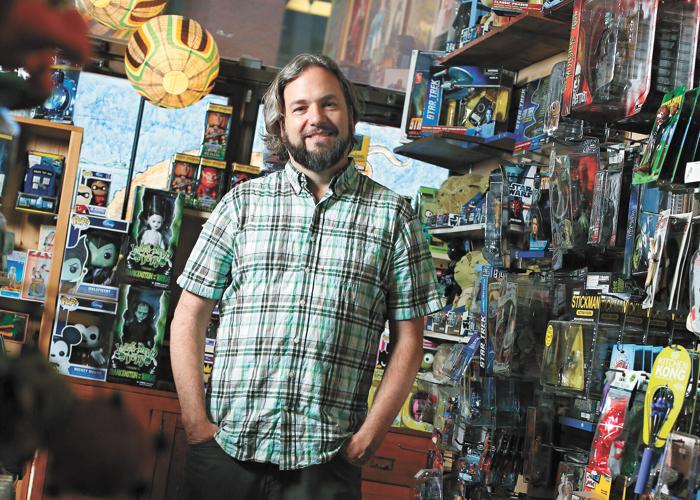
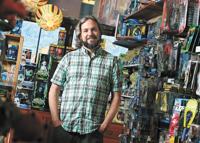
Andy Dinnison at Boo Radley’s in 2013.
ANDY DINNISON
Then: 32, entrepreneur and local business owner
Now: 62, retired
Andy Dinnison and the Inlander have followed similar paths in this lifetime.
When we published the original 20 under 40 cover package, our publication had been up and running for two years and five months. Downtown Spokane’s now-beloved gift shop Boo Radley’s had been open for two years and six months.

Dinnison beat the Inlander by one month when he founded Boo Radley’s with his wife, Kris, in late August 1993, but obviously, we didn’t (and still don’t!) hold any ill will toward him, as we noted him as someone who was making a true difference in the community back in 1996.
Since then, the Dinnisons in 1997 moved Boo Radley’s into its current location. They bought an adjoining space in 2009 to open up another beloved Spokane institution, Atticus Coffee & Gifts.
Over the past 30 years, Boo Radley’s has won the “Best Gifts” category in the Inlander’s Best Of Readers’ Poll more than a dozen times.
The Dinnisons sold Boo Radley’s to longtime employee Jen Menzer in 2022, selling Atticus the year after.
Now, Dinnison is enjoying retirement to the fullest extent by reading — slowly but surely — through their immense collection of books. (Kris is an author.) He says one of the best titles he’s read thus far is Wild Dark Shore by Charlotte McConaghy.
“I wish I could say I was tackling more of the classics, but I’m still a creature of looking at what’s bright, shiny and new.”
As a self-proclaimed “housebound hermit,” Dinnison isn’t daunted by the challenge of getting through a lifetime’s worth of books, yet he sometimes gets distracted.
“I’m living my retired dream,” he says. “But sometimes those cute Maine Coon cat videos get in the way.” (MADISON PEARSON)

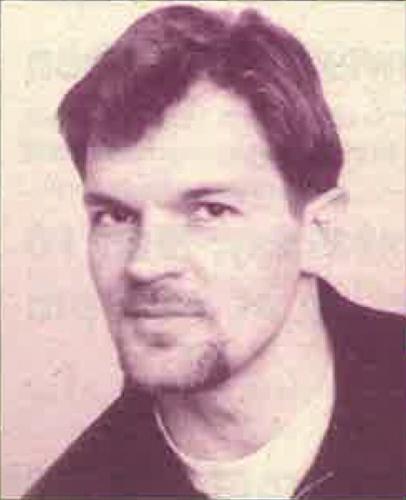
ROB CRUMLEY
Then: 29, volunteer with Odyssey Youth Movement
Now: 59, unknown — we weren’t able to get in contact
In 1996, Rob Crumley was recognized for his volunteer work with Odyssey Youth Movement.
After he was featured in the Inlander, the 1989 Eastern Washington University communications graduate went on to work in leadership roles for election campaigns, universities, marginalized support groups and other education organizations.
Crumley worked at Spokane Regional Health District as the agency’s community center director and health programs coordinator until 2000, when he left the Inland Northwest for Austin, Texas. There he spent a decade working communications gigs, and in 2012 he became the director of communications at the Washington, D.C., Association of Farmworker Opportunity Programs.
After spending five years in the nation’s capital, Crumley moved back to Texas where he worked half a year as the communications director for Barbara Canales’ successful 2018 campaign for Nueces County judge.
Since then, it’s not quite clear what he’s been up to. Outdated LinkedIn entries indicate Crumley works as a communications director at Texas A&M University — Corpus Christi and as the national director of external affairs for Frog Street, an early childhood curriculum provider.
Our messages to Crumley went unreturned, but if you know him we’d still love to chat about his work these past three decades. (COLTON RASANEN)

PERCY WATKINS III
Then: 31, police officer
Now: 61, consultant and ministry work
Back in 1996, Watkins shared about his work as a neighborhood resource officer who regularly spoke with community members to try to proactively build relationships and address root causes of violence before it happens, particularly with young people.
“I talk to them about goals and what they need to do to reach those goals,” he said at the time. “It’s about building a relationship so kids feel like they can come up and share deep issues as well as surface talk.”
We tried to get in touch with Watkins, but didn’t hear back. According to his LinkedIn, he shifted to consultant work and founded Love of Christ Ministries. In a 2018 story about his brother, the Rev. James Watkins, taking over the lead ministry role at New Hope Baptist Church from their father, the Rev. Percy “Happy” Watkins Jr. (a local civil rights champion who died in 2024), the Fig Tree noted that Watkins III was a minister. (SAMANTHA WOHLFEIL)

BRENDA BRYAN
Then: 30, local fashion designer and co-founder of the store/brand Garb•age
Now: 60, unknown — we weren’t able to get in contact
KANDI BARTLETT
Then: 28, local fashion designer and co-founder of the store/brand Garb•age
Now: 58, owner of Amazing Alterations in Spokane
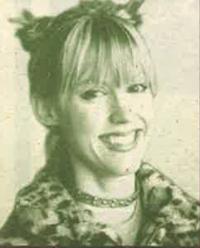
Originally meeting in Spokane’s punk scene in the 1990s, Brenda Bryan and Kandi Bartlett connected over their love for fashion. Six months after meeting, the two opened Garb•age in downtown Spokane, a vintage clothing store that also featured their original fashion designs.

Garb•age has long since closed, and the two eventually parted ways to explore other business avenues. Bartlett later remarried and still lives in Spokane. In 2024, she opened a custom dress store called Love Beauty Fame at 1608 N. Monroe St., which as of this month she rebranded as a dress alteration business called Amazing Alterations.
Bryan, on the other hand, moved to the Seattle area sometime in the early 2000s. Pivoting from fashion, she became a yoga instructor and a licensed massage therapist and opened the now-closed studio Westside Yoga and Doga in 2010. As the name suggests, her clients weren’t just humans. Bryan specialized in Hatha yoga classes to which clients would bring their dogs, and even published an instructional book called Barking Buddha: Simple Soul Stretches for Yogi and Dogi in 2009.
The unconventional yoga idea formed when Bryan was working at a Seattle Humane fundraiser, doing dog massages.
“Something about the ‘heart connection’ we have with our dogs encourages us to uncover qualities in ourselves that we may otherwise have difficulty connecting to: unconditional love, letting go, being present, giving ourselves permission to play,” Bryan writes in Barking Buddha.
Editor’s Note: Unfortunately, we were unable to get in touch with Bryan for this write-up, yet we found other media coverage of her career. (DORA SCOTT)

DAN SPALDING
Then: 33, artist, art instructor, property developer and owner/founder of David’s Pizza (founded in 1993)
Now: 63, property developer, musician, painter, arts benefactor, hot tub repairman
If you were to bump into Dan Spalding and ask what he’s up to these days, you might get an elusive answer. Like hot tub repairman. Or piledriver operator.
Seated at a table that looks out of his apartment on the third floor of the Longbotham Building, one of the handful of historic properties he owns in downtown Spokane, he explains that pleasantries and small talk can’t capture the essential nuances.
“I’ve got my fingers in a lot of different pies,” he says. “On a given day, I’ll be doing so many different things that it’s just not a quick, easy answer.’”
The trajectory of Spalding’s life so far is more about fortuitous happenstance than tidy chronologies. When the Inlander profiled him in 1996, he was three years into being the proprietor of David’s Pizza, busy renovating the 1909 brick building he now calls home (the former owner, he says, “forced my hand into the real-estate game”) and teaching classes at Spokane Art School.
What he really wanted, though, was to concentrate on his oil painting. And that did happen. For quite a while.
“I was fully immersed in the painting world for 20 years, probably,” he says. “Gallery shows, sales, doing it I would say full time. And then around 2000, I got reintroduced to music and started down that path again. I hadn’t done it since high school. I started just kicking around again, playing a little, and it was a rebirth.”
As he picked up the bass, organ, harmonica, lap steel and saxophone, he “slowly tapered away from painting” until putting the brush down completely 10 years ago. The break coincided with the death of Robert Gilmore, a longtime Gonzaga University art professor whose mentorship had a profound influence on Spalding.
Behind the scenes, alongside a gradual return to portraiture, Spalding has had a significant influence of his own. His properties have hosted pivotal local arts venues like The Bartlett, The Chameleon and Terrain. He acknowledges that his approach might seem starry-eyed from a purely mercenary perspective, but money isn’t the point.
“Whatever I’m doing, at least it’s creative and dynamic and it’s feeding the creative world. And that’s what’s most important, whether it’s painting or music or architectural renovations or building cabins,” he says. “It’s all the same stuff. It’s proportion. It’s balance. It’s authenticity.” (E.J. IANNELLI)

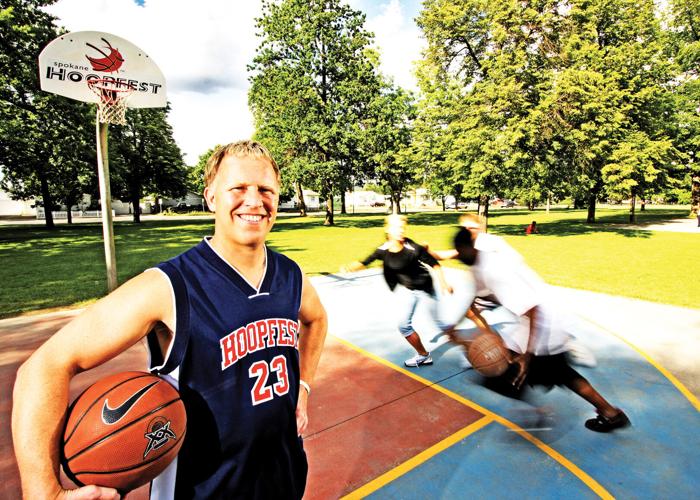
Hoopfest co-founder Rick Steltenpohl in 2009.
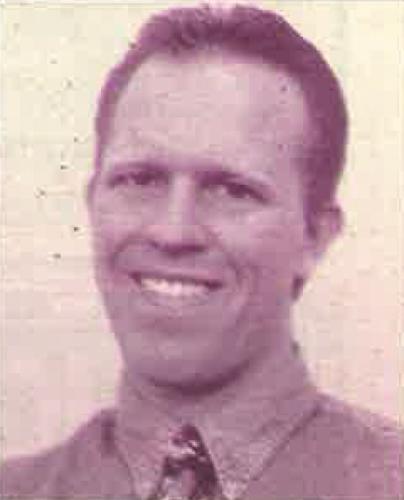
RICK STELTENPOHL
Then: 32, Hoopfest tournament director
Now: 62, Principal and director of game management and business operations at Eventuris
A founding board member of Hoopfest, Rick Steltenpohl’s love of 3-on-3 basketball has never wavered over the past three decades. While he now resides in Sammamish and isn’t involved with the annual event he helped to become the largest 3-on-3 tournament in the world, he’s still keeping some of that legacy alive.
When Steltenpohl left Hoopfest in 2014, his sights were set on doing more national work. He and operations manager Aaron Magner left the organization to form Eventuris, which puts on 3-on-3 basketball events all over the country. And they’ve stayed busy, organizing events for NBA teams like the Portland Trailblazers, Chicago Bulls and Los Angeles Clippers, as well as coordinating operational activities on the NBA G League’s Players Invitational.

“Hoopfest obviously was the foundation for this next step that I took,” Steltenpohl says. “Hoopfest, to me, is the greatest event in the world. So I love Hoopfest, but it’s been a very productive and happy time for me to have that freedom and that ability to go out and kind of spread my wings.”
Steltenpohl’s love for competitive 3-on-3 basketball and the friends he’s made along the way remains a driving force in his professional pursuits.
“What I tell my team is, I care about the game. I’ve always cared about the game. So all this other stuff is nice, right? We do a great center court, great slam dunk [contest], a wonderful layout and all that. But what I really care about is the game.” he says. “At Hoopfest, we had 450 courts. I said, ‘Hey, I want every court to be as good as it could be, because I don’t want someone else playing on a court that I wouldn’t play on.’ So it’s just that attention to detail, that quality.
“3-on-3 basketball has everything. It has community. It has competition. And anyone can do it,” he continues. “You get a feel from the 8-year-olds, and then from the 15-year-olds that are high school players, and then you have the adults that are playing with their friends because they just love to hoop. And when the emotion of the crowd and just so much variety in the play, being able to bring that to a community just excites me.” (SETH SOMMERFELD)

SUSY DINWIDDIE
Then: 24, local theater actor
Now: 54, mom
Three decades ago, a vivacious twentysomething named Susy Wasson-Picard was hailed in these pages as one of “Spokane’s rising stars” in the local theater scene.
Around that time she had garnered a best actress award from an institution that’s still going strong today, the Spokane Civic Theatre. And she was fresh off directing and starring in Frederick Knott’s thriller Wait Until Dark (whose lead, incidentally, is also named Susy) for Valley Rep, a troupe that’s since receded into the annals of history.
Her stellar ascent didn’t end with that short profile. She continued to perform alongside a who’s who of regional theater: names like Kathie Doyle-Lipe, Troy Nickerson, Jean Hardie, Mark Pleasant and Patrick Treadway.
“They were my teachers through that time when I was living and breathing theater,” she recalls. “And not just theater but community theater.”
As of 1998, audiences could still catch her treading the boards in, say, a production of Molière’s The Imaginary Invalid at the Civic.

In time, however, there came what she calls “a dry spell” as her priorities changed. A remarriage saw Susy Wasson-Picard become Susy Dinwiddie. She began channeling more time and energy into motherhood and family responsibilities than into rehearsals.
A cancer scare would eventually rule out acting in the near term. The hiatus became indefinite. Dinwiddie’s final performance was in a Spokane Children’s Theatre production of Go, Dog. Go! in 2012. The consolation was that she shared her farewell stage with friends like Doyle-Lipe and Pleasant as well as her 7-year-old daughter, who’s now in the pre-med program at Gonzaga.
“The timing on that was absolutely superb. When I was facing an unknown future, I had at least shared a production with my daughter,” she says.
Her co-stars haven’t forgotten her talent. She’s received more than a few appeals to return to the stage.
“My dear friends tried to give me some opportunities to do so. I don’t know if I was ready yet. Scared, maybe, because it had been so long,” Dinwiddie says.
But she admits that there was another fear: the “magnetic” lure of the spotlight and the camaraderie. Going back might make her wish she’d never left.
“Life pulls us in different directions,” she says, “but [theater] played such a huge role in who I am now, and I wouldn’t have gotten here if I hadn’t been doing what I was doing with the theater in Spokane at that time with those beautiful, amazing, talented people.” (E.J. IANNELLI)

SAM MACE
Then: 27, environmental activist at Inland Empire Public Lands
Now: 57, freelance environmental activist
Growing up in rural Western Oregon near Coos Bay, Sam Mace saw the impacts of clear cutting in her small hometown. Though she hadn’t met an environmentalist until she enrolled at Reed College in Portland, Mace became passionate about protecting the environment and started volunteering at age 21.
When the Inlander interviewed her in 1996, Mace was working at the Inland Empire Public Lands Council, where she coordinated with other environmental groups and activists and spoke at local schools.

“My mission is to reach out to people who are frustrated with how the world is going and teach them how to make a difference,” Mace told us in 1996.
She didn’t deviate from that mission, working for Idaho and Washington’s Wildlife Federations as a salmon and steelhead coordinator from 1998 to 2000, and then as an outreach coordinator for Trout Unlimited.
For over two decades of her career, she worked for Save Our Wild Salmon as a project director, fighting for a free-flowing Snake River to help native fish populations. She left the environmental coalition at the beginning of this year, transitioning to freelance work related to conservation policy.
“My ‘professional goal’ is to see the lower Snake River corridor restored, salmon and steelhead restored to the Snake River basin, and a modern transportation system in place to replace the lower Snake River barge corridor,” Mace writes on her LinkedIn profile (she declined an interview with us). “One day I want to do a river trip from Boundary Creek on the Middle Fork of the Salmon to Pasco, Washington.” (DORA SCOTT)
HELP US FIND THESE FOLKS!
Despite our best journalist/detective efforts to find all 20 of the rising community leaders we featured back in 1996, there were a couple we couldn’t track down.
We’d still love to hear from them! If you know how to reach either of the following folks, please drop us a line at editor@inlander.com.
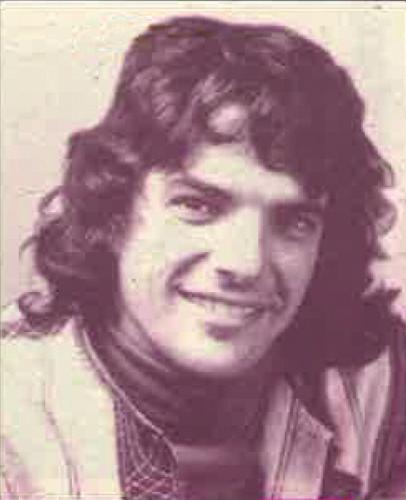
ANNE SCIORTINO (then 37, local animal rights and political activist)
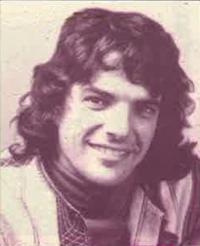
KELLY VANCE (then 24, frontman for the local fusion rock band Mama’s Dogma)